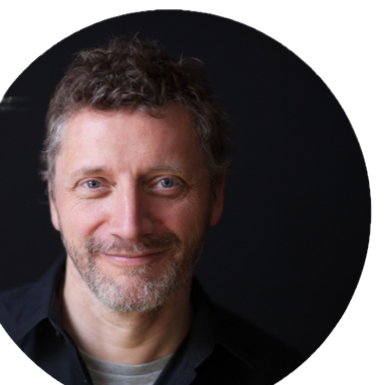
douglas geddes
Helping organisations regain clarity — and turn it into coherent action
When to call me
Most organisations do not call for help by naming the real issue straight away.
They call because something feels off.
Communication no longer lands. The structure no longer makes sense. Teams lose sight of the bigger picture. Leadership senses drift, but cannot clearly name it. Change feels necessary, but the right starting point is still unclear.
These situations may look different on the surface, but they often have something in common: the organisation has become a little harder to understand — for others, and sometimes for itself.
Here are some of the moments in which my work tends to be useful.
When communication has become too complex, too vague — or too bland
Sometimes an organisation has a lot to say, but says too much at once. Sometimes it has simplified so much that what remains feels generic, impersonal, or forgettable.
In both cases, the issue is not always communication alone. It may be that the organisation is no longer fully clear on what it stands for, how it creates value, or what makes its voice distinct.
This is often a good moment to step back and clarify what truly needs to be expressed before producing more messages.
When the organisation has grown messier than its story
Growth, change, new layers, new people, shifting priorities: over time, many organisations become harder to read.
Roles overlap. Visibility decreases. Friction or duplication grows. The structure no longer clearly reflects the mission.
This is not always a sign of failure. Often, it simply means the organisation has evolved faster than its own understanding of itself.
That is usually a good time to pause, make sense of what has emerged, and redesign from there.
When teams no longer fully see what they are doing together
The issue is not always conflict in the dramatic sense.
Sometimes people work hard, but the thread between their efforts and the bigger picture becomes weaker. Teams become more local, more fragmented, or more pressured. Communication becomes functional, but less meaningful.
In those moments, the need is not necessarily “team-building” as such. It may be a need to recover shared meaning, reconnect roles to purpose, and make the collective picture visible again.
When leadership senses drift, but cannot yet name it clearly
Something feels less coherent than it used to. Decisions are harder to align. Certain tensions keep returning. The message is less clear. Energy is being lost somewhere, but the problem is still too diffuse to formulate well.
When that happens, the risk is to treat symptoms one by one without understanding what links them.
This is often where careful listening and systemic diagnosis become most useful.
When brand, structure, and lived reality no longer match
Sometimes the external story sounds right, but no longer feels true inside. Sometimes the opposite happens: the organisation contains something rich and valuable, but its visible identity no longer reflects it.
This misalignment can show up in many ways: stakeholder confusion, blurred positioning, internal fatigue, recruitment difficulty, strategic drift, or a general sense that the organisation is no longer fully inhabiting its own story.
This is often a sign that identity work is needed — not only for image, but for coherence.
When a people problem may not only be a people problem
Sometimes a team or leadership group focuses on one person, one tension point, or one difficult relationship.
And of course, individual dynamics do matter.
But sometimes what appears to be a local issue is also revealing something larger: a system that struggles to integrate difference, communicate under pressure, absorb complexity, or work well across contrasting styles and expectations.
In those situations, addressing only the visible friction may not be enough. The more useful question may be: what is this tension telling us about the way the organisation functions as a whole?
When change is needed, but the right starting point is still unclear
Many organisations know they need to move — strategically, structurally, culturally, or around themes such as growth, governance, ESG, or identity — before they are clear on what the real starting point should be.
There may be urgency. There may be goodwill. There may even be momentum.
But without enough clarity, initiatives easily become generic, overloaded, or disconnected from the organisation’s actual reality.
This is often where my work can help most: by creating a clearer reading of the situation first, so that the next step is better grounded and more likely to land.
These are examples, not boxes
The situations above are only examples.
The common thread is simpler: something important has become harder to read, name, align, or carry. My role is to help make the organisation more intelligible to itself, so that the response that follows is more coherent, more grounded, and more useful.
Sometimes that response is a clearer narrative. Sometimes an organisational adjustment. Sometimes team work, strategic clarification, or a broader intervention designed with partners.
But in each case, the first step is the same:
〝Understanding what is really going on〞
understanding what is really going on.
How I work
I do not begin with a ready-made answer.
I begin by helping make sense of what is really going on, so that the response fits the reality of the organisation rather than a pre-packaged method.
The process is always adapted to context, but it usually follows five steps.
| ① Listen | Through conversations, interviews, selected observations, and existing materials, I try to understand how the organisation sees itself, how people experience it, and where tension or confusion begins to show. |
| ② Detect | I look for patterns, contradictions, weak signals, blind spots, and the gap between stated identity and lived reality. |
| ③ Clarify | I turn that reading into a clearer picture: what the organisation is really trying to do, what has become blurred or diluted, and what is actually at stake. |
| ④ Design | From that clarity, I help shape the right response — whether strategic, relational, structural, communicational, or cultural. |
| ⑤ Deploy | I help translate that response into action, directly and, where useful, with trusted partners. This is not a rigid formula. What stays constant is the logic: listen carefully, understand what is really happening, clarify what matters most, and build the response from there. |
What you can expect
This approach is especially useful when a situation is still too blurred to solve cleanly.
It helps avoid two common traps: moving too quickly into action without enough clarity, or staying too long in reflection without creating movement.
The aim is to create both:
a truer reading of the organisation
and a more relevant basis for action
What this can lead to
This work does not always lead to the same kind of response.
That is deliberate.
I do not start from a fixed service and try to fit every organisation into it. I start from the situation itself: what has become unclear, what needs to be better understood, and what kind of response would actually help.
Sometimes the result is a clearer reading of the organisation and one strong recommendation. Sometimes it opens into broader work around positioning, structure, alignment, communication, culture, or change.
The form varies.The aim stays the same: helping the organisation move from confusion or drift toward greater clarity, coherence, and usable direction.
A clearer picture of what is really going on
Sometimes that is already the most valuable outcome.
An organisation may not need an immediate solution as much as a better reading of itself: what patterns keep repeating, where the confusion really sits, what tensions are structural rather than personal, and what the issue seems to be beneath the official request.
This can lead to:
a listening-based diagnostic
an organisational clarity review
a synthesis of patterns, tensions, and contradictions
a reframed understanding of the issue
one central recommendation that helps reorder the whole picture
In some situations, this alone changes the quality of the conversation.
A clearer identity, positioning, or narrative
Sometimes what has become unclear is not only the organisation’s functioning, but the way it understands and expresses who it is.
Its story may have become too broad, too technical, too vague, or simply less true than it once was. Or the organisation may contain something rich and distinctive that is no longer being expressed clearly.
This can lead to:
positioning clarification
mission or narrative refinement
a stronger articulation of what the organisation stands for
a manifesto, charter, or internal identity platform
a simpler, clearer way of expressing direction
This is not branding in the cosmetic sense. It is identity work aimed at making the organisation more coherent and more intelligible — to itself and to others.
Better alignment between mission, structure, and people
Sometimes the real need is less about communication than about alignment.
Teams may be working hard without enough shared picture. Roles may have become blurred. The structure may no longer support the mission as clearly as it should. Leadership may carry one version of the story while the lived organisation expresses another.
This can lead to:
leadership alignment work
team sense-making sessions
role or mission clarification
a clearer organisational logic
facilitated conversations around drift, growth, or internal incoherence
The point is not artificial harmony. It is to make the organisation more workable, more readable, and more internally consistent.
A better-grounded starting point for change
Many organisations know that something needs to move before they know what kind of change they actually need.
In those moments, it is easy to jump too quickly into frameworks, initiatives, or plans. But if the diagnosis is too thin, change tends to become generic, overloaded, or disconnected from reality.
One of the most useful outcomes of this work can therefore be a clearer basis for action.
This can lead to:
a clearer framing of the change ahead
identification of the true entry points
a phased intervention logic
a roadmap for what to tackle first, later, or not at all
guidance on what capabilities or support are needed next
In other words: not movement for its own sake, but change grounded in a better reading of the organisation.
A response built with the right people around it
Not every situation should be addressed through one discipline alone.
Sometimes the right next step is mainly strategic. Sometimes it is organisational, relational, cultural, or communicational. Sometimes it calls for a mix.
That is why the work may continue directly with me, or extend through collaboration with trusted partners in areas such as:
branding and identity
coaching
organisational development
communication
culture and leadership
structure and governance
transformation support
The idea is simple: once the real issue is clearer, the right combination of capabilities often becomes clearer too.
What clients often gain
Depending on the starting point, this work can create:
more focus
better alignment
clearer communication
stronger decision-making
less wasted energy
a more coherent story
a more intelligible structure
a more grounded basis for moving forward
Sometimes the most valuable result is surprisingly simple:
〝Yes — This is what is actually going on, and this is what we need to do next.〞
About
My work sits at the intersection of strategy, communication, systems thinking, and human dynamics.
Over time, I have worked across branding, teaching, facilitation, organisational reflection, change-related contexts, and strategic support. On paper, these may look like different paths. In practice, they are connected by the same thread: helping people and organisations understand more clearly what is really going on, what matters most, and what kind of response makes sense.
I am drawn to situations where things have become blurred, overloaded, misaligned, or harder to name than they first appear. That is often where communication, identity, structure, and human dynamics begin to reveal the same issue from different angles.
That is the place I tend to work in.
A hybrid background, with a coherent thread
I have never worked comfortably within a single narrow box.
My background brings together strategic thinking, communication, creativity, facilitation, and a long-standing interest in how organisations function — and how they lose clarity, coherence, or meaning over time.
That does not mean I try to do everything. It means I tend to look across what are often treated as separate fields.
A communication issue may point to something deeper about identity.A structural problem may also be a question of meaning, alignment, or purpose.A brand question may reveal something about the organisation’s internal reality.
My role is often to help make the whole picture more visible, so that the next step is better chosen.
How I tend to work
I am not a method-first consultant.
I do not start by imposing a framework and fitting the situation into it. I start by listening carefully, reading patterns, and trying to understand what the organisation is expressing through its language, tensions, habits, structure, and blind spots.
That does not mean the work is vague or purely intuitive. It means the process is built from the truth of the situation rather than from a pre-packaged answer.
I value clarity, depth, and practical usefulness. I am interested in what can genuinely help an organisation become more coherent — not just more polished.
Why this work matters to me
Many organisations do not mainly suffer from lack of intelligence or goodwill.
They suffer from drift, overload, dilution, misalignment, or from becoming harder to understand — even to themselves. When that happens, energy is lost. Communication becomes less true. Change becomes harder to carry well. People work hard without always being clear on what they are carrying together.
Helping organisations recover a clearer sense of themselves is, to me, not a cosmetic exercise. It is often a condition for better decisions, stronger collaboration, more meaningful communication, and more grounded change.
Working alone when needed, with others when useful
Some situations call for a focused intervention and can be handled directly.
Others benefit from a broader set of capabilities: branding, coaching, organisational development, communication, culture, structure, or transformation support.
When that is the case, I work alongside trusted partners whose expertise complements my own. I see that less as an extension of capacity than as a way to make sure the response fits the organisation rather than the limits of one discipline.
In that sense, the work begins with me, but does not always end with me alone.
What I bring
If I had to name the thread running through my work, it would be this:
〝I help make organisations more intelligible to themselves.〞
That may mean clarifying what an organisation stands for, naming a pattern that has remained diffuse for too long, helping a team reconnect with the bigger picture, or identifying the real issue beneath the official request.
In each case, the aim is similar: to create enough clarity, coherence, and grounded understanding for better action to become possible.
A structural request that was really about collective alignment
Public local authority
| What they asked for | Support in redesigning the organisation chart. |
| What was really going on | The formal issue was structural, but the deeper difficulty was relational and political. The executive team was not aligned enough around a shared way of working or a shared understanding of what the structure was meant to serve. |
| What I helped do | Rather than treating the organisation chart as a purely technical exercise, I used it as a way to surface the underlying dynamics, clarify what was missing, and reframe the issue around collective functioning. |
| What shifted | The conversation moved away from individual positions and toward a clearer shared understanding of purpose, structure, and decision-making. The structural question became a lever for better alignment. |
A strategy brief that was really about viability, focus, and organisational shape
NGO focused on migration issues
| What they asked for | Help clarifying strategy and supporting the autonomisation of management. |
| What was really going on | Political change had weakened recurring funding, cash flow was under pressure, governance was fragile, and decision-making had become hesitant. What looked like a strategy issue was in fact a broader problem of viability, prioritisation, and organisational form. |
| What I helped do | I helped disentangle the situation, set priorities, explore scenarios, and design a reorganisation roadmap that matched both financial reality and mission. |
| What shifted | A leaner, more focused, and more viable path forward emerged — one that remained humane while helping preserve the organisation’s purpose under pressure. |
A rebranding brief that called for discernment rather than rupture
Union
| What they asked for | Lead a rebranding process for an identity seen as outdated. |
| What was really going on | The identity did need refreshing, but teams still had real attachment to it. The issue was not that the brand had lost all value, but that its strengths had not been clearly recognised, structured, and built on. |
| What I helped do | Through workshops and perception work, I helped reframe the question. Rather than replacing the brand outright, we identified the equity already present and built from there. |
| What shifted | The organisation gained a stronger and more coherent brand expression without losing continuity. The resulting signature is still in use more than ten years later. |
A common thread
These situations are quite different on the surface.
One began with a structural request.One with a strategic and governance challenge.One with a branding brief.
But in each case, the stated problem was not quite the real one.
The work began by listening carefully, clarifying what was actually at stake, and shaping a response that fit the deeper reality of the organisation — not just the initial wording of the brief.
That is often where the most useful work begins.
Start with a conversation
Sometimes the first useful step is simply to name the issue more clearly.
If your organisation has become harder to understand — for itself, for others, or both — I’d be glad to explore what is really going on with you.
You do not need to arrive with a perfectly formulated brief. Many of the situations I work on begin with something important that feels blurred, misaligned, overloaded, or harder to carry than it should be.
A first conversation can already help clarify what kind of issue may be present, what kind of response might make sense, and whether I am the right person to help — directly or alongside others.
If that sounds useful, feel free to get in touch.